
 15 Topics
 5 Days
 60 Sessions
Programme Overview
Training Description
Rice and maize farmers
Agricultural extension officers and advisors
Agricultural researchers and scientists
Seed producers and distributors
Farm managers and supervisors
Agricultural cooperatives and associations
Rural development practitioners
Agricultural educators
Soil scientists and consultants
Water resource managers
Pest management specialists
Sustainability officers
Students and enthusiasts of sustainable agriculture
Session Objectives
- Understand the principles and benefits of sustainable rice and maize production. Implement techniques for improving soil health and fertility in rice and maize fields. Understand the role of water management in sustainable rice and maize production. Implement techniques for efficient irrigation and water conservation. Understand the role of integrated pest and disease management in sustainable rice and maize farming. Implement techniques for managing weeds and reducing herbicide use.
About the Course
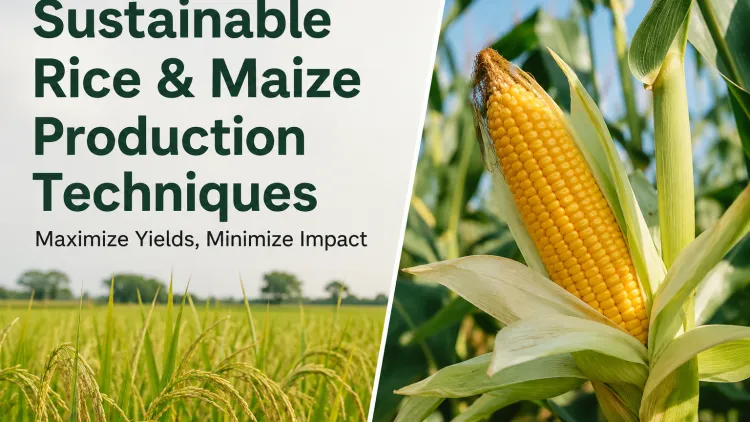
Sustainable Rice and Maize Production Techniques equips farmers and agricultural professionals with the knowledge and skills to optimize yields while minimizing environmental impact. This course focuses on implementing best practices for cultivation, resource management, and pest control in rice and maize farming. Participants will learn to enhance soil health, conserve water, and improve crop resilience. By mastering sustainable production techniques, professionals can contribute to food security and build profitable, eco-friendly farming systems.
Curriculum & Topics
15 Topics | 60 Sessions
-
 Workshop 1.1:
Principles and benefits of sustainable grain farming.
Workshop 1.1:
Principles and benefits of sustainable grain farming.
-
Workshop 1.2:
Understanding the role of these staple crops in food security.
-
Workshop 1.3:
Benefits of minimizing environmental impact.
-
Workshop 1.4:
Historical context and modern sustainable practices.
-
Workshop 2.1:
Techniques for enhancing soil organic matter.
-
Workshop 2.2:
Implementing conservation tillage and no-till practices.
-
Workshop 2.3:
Utilizing cover crops and green manures.
-
Workshop 2.4:
Managing nutrient cycling and soil biodiversity.
-
Workshop 3.1:
Understanding water requirements and irrigation needs.
-
Workshop 3.2:
Implementing efficient irrigation techniques.
-
Workshop 3.3:
Managing water logging and drainage.
-
Workshop 3.4:
Utilizing water harvesting and conservation practices.
-
Workshop 4.1:
Techniques for implementing alternate wetting and drying (AWD) in rice.
-
Workshop 4.2:
Utilizing drip and sprinkler irrigation in maize.
-
Workshop 4.3:
Implementing precision irrigation and scheduling.
-
Workshop 4.4:
Benefits of reducing water waste.
-
Workshop 5.1:
Implementing IPM strategies for pest and disease control.
-
Workshop 5.2:
Utilizing biological and cultural control methods.
-
Workshop 5.3:
Managing pesticide use and residues.
-
Workshop 5.4:
Benefits of minimizing chemical inputs.
-
Workshop 6.1:
Techniques for managing weeds through cultural practices.
-
Workshop 6.2:
Implementing mechanical weed control.
-
Workshop 6.3:
Utilizing cover crops and crop rotations for weed suppression.
-
Workshop 6.4:
Benefits of reducing herbicide reliance.
-
Workshop 7.1:
Techniques for selecting high-yielding and climate-resilient varieties.
-
Workshop 7.2:
Implementing seed treatment and quality control.
-
Workshop 7.3:
Managing seed storage and viability.
-
Workshop 7.4:
Utilizing improved seed varieties and hybrids.
-
Workshop 8.1:
Techniques for optimizing planting dates and spacing.
-
Workshop 8.2:
Implementing precision planting and seeding.
-
Workshop 8.3:
Managing harvesting techniques for minimal losses.
-
Workshop 8.4:
Utilizing mechanized harvesting and post-harvest handling.
-
Workshop 9.1:
Techniques for implementing crop rotations with rice and maize.
-
Workshop 9.2:
Utilizing intercropping and mixed cropping systems.
-
Workshop 9.3:
Implementing crop diversification for resilience.
-
Workshop 9.4:
Benefits of enhancing agroecosystem diversity.
-
Workshop 10.1:
Techniques for managing crop residues for soil improvement.
-
Workshop 10.2:
Implementing composting and mulching.
-
Workshop 10.3:
Utilizing biochar and other organic amendments.
-
Workshop 10.4:
Benefits of enhancing soil carbon sequestration.
-
Workshop 11.1:
Techniques for adapting to climate change impacts.
-
Workshop 11.2:
Implementing climate-resilient practices.
-
Workshop 11.3:
Utilizing climate forecasting and risk management.
-
Workshop 11.4:
Benefits of reducing greenhouse gas emissions.
-
Workshop 12.1:
Analyzing the economic benefits of sustainable practices.
-
Workshop 12.2:
Evaluating the costs and returns of improved techniques.
-
Workshop 12.3:
Identifying market opportunities for sustainably produced grains.
-
Workshop 12.4:
Benefits of enhancing farm profitability.
-
Workshop 13.1:
Developing communication and extension strategies.
-
Workshop 13.2:
Building farmer networks and knowledge sharing platforms.
-
Workshop 13.3:
Implementing training programs for sustainable grain farming skills.
-
Workshop 13.4:
Scaling up successful production models.
-
Workshop 14.1:
Analyzing real-world examples of sustainable rice and maize production.
-
Workshop 14.2:
Highlighting best practices and innovative techniques.
-
Workshop 14.3:
Documenting economic and environmental impacts.
-
Workshop 14.4:
Farmer testimonials and field visits.
-
Workshop 15.1:
Exploring emerging trends and innovations.
-
Workshop 15.2:
Integrating new technologies and research findings.
-
Workshop 15.3:
Adapting to evolving environmental and market conditions.
-
Workshop 15.4:
Building resilient and sustainable food systems through improved grain farming.